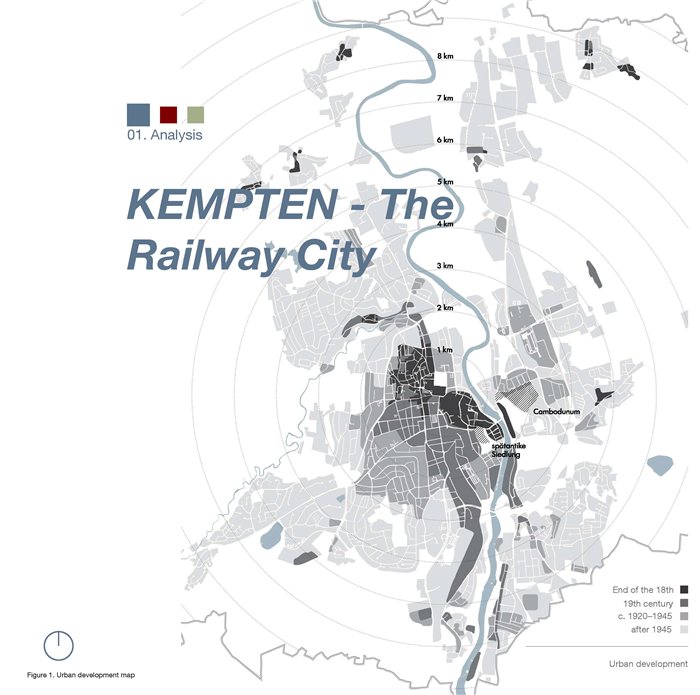
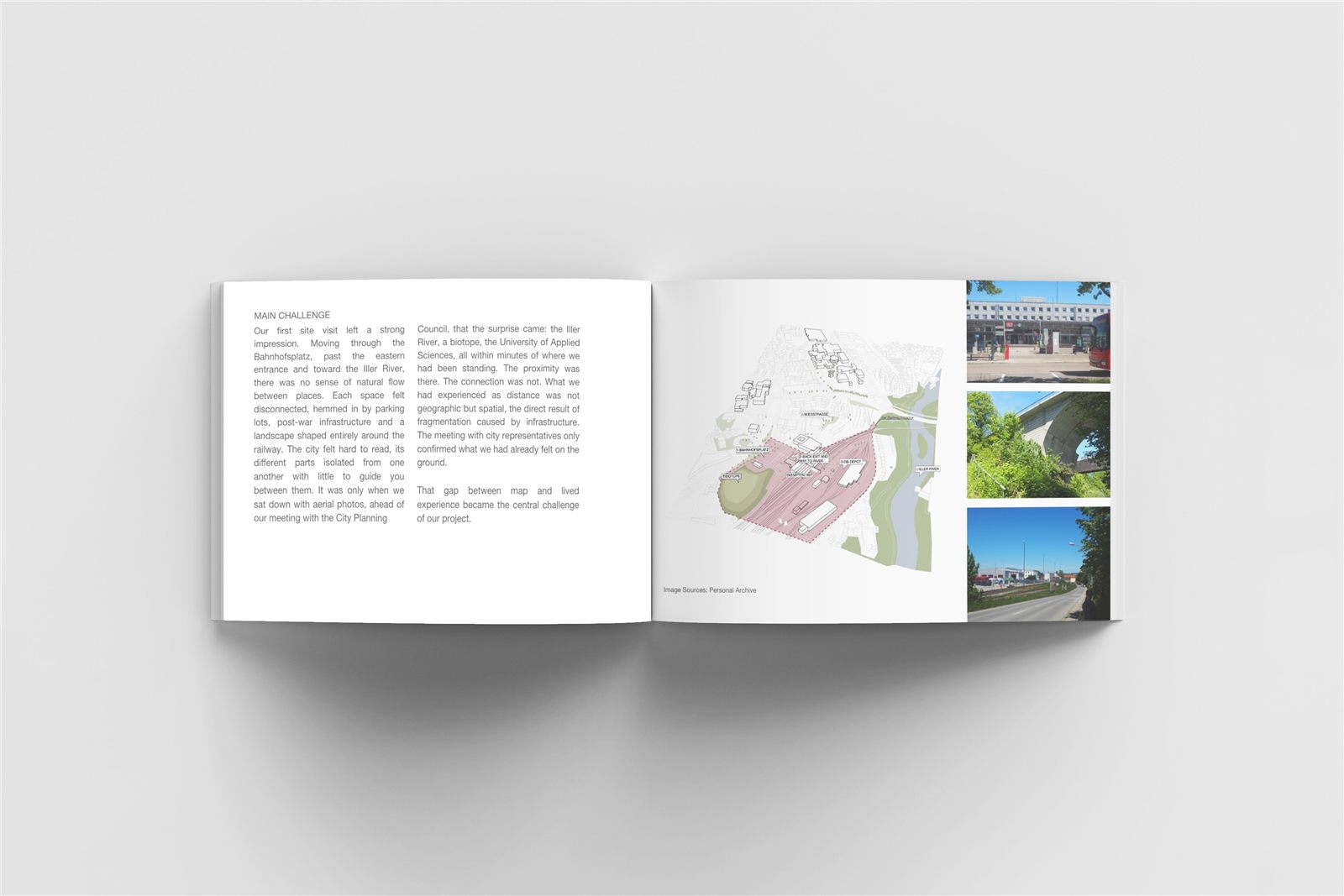
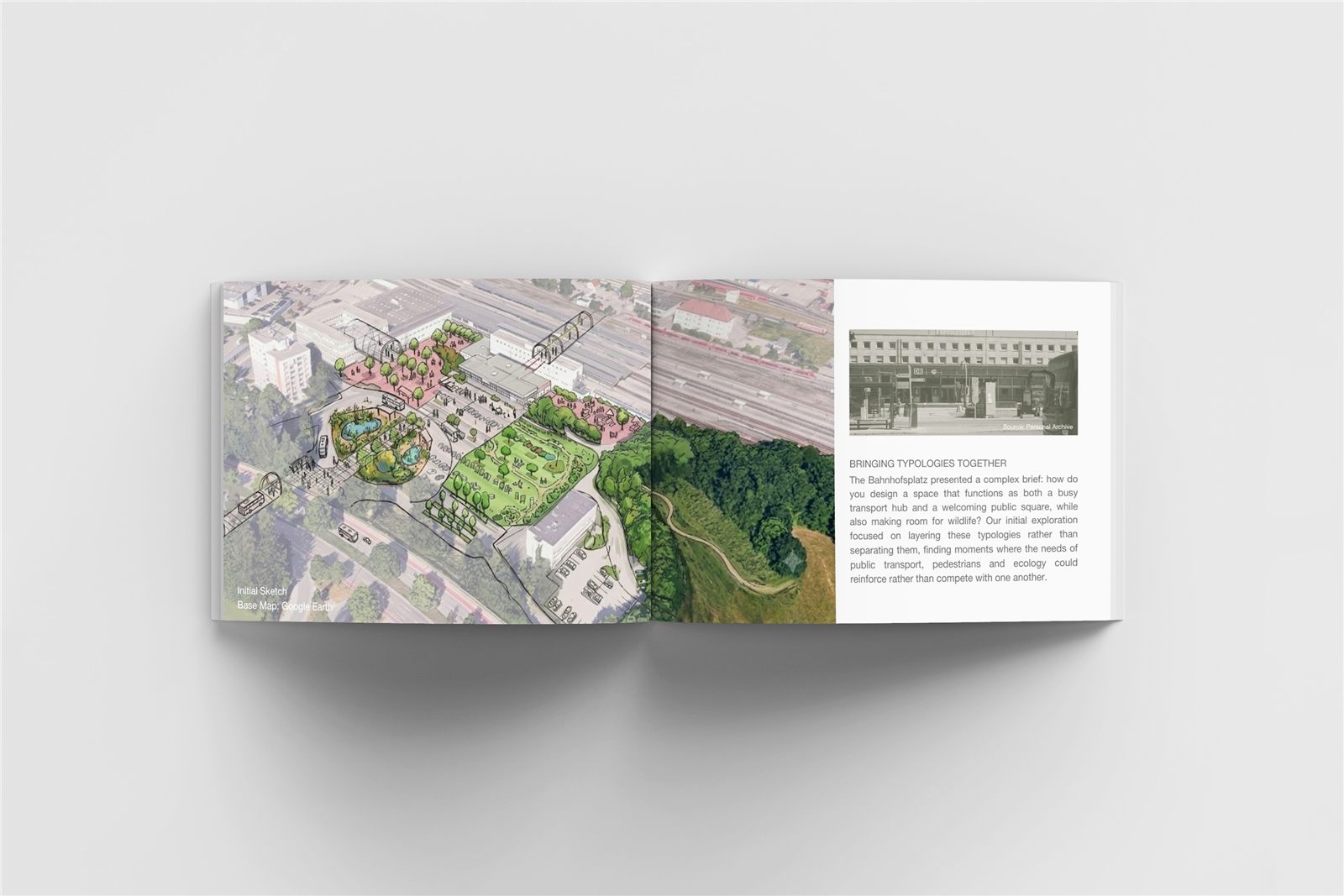
During the analysis, we found that the station sits within reach of several important landmarks: a university of applied sciences, the Iller River, an open biotope, and the city center, only about a twenty-minute walk away. The problem isn't distance. It's that the area was designed around cars and infrastructure, not people, and so everything feels experientially far apart.
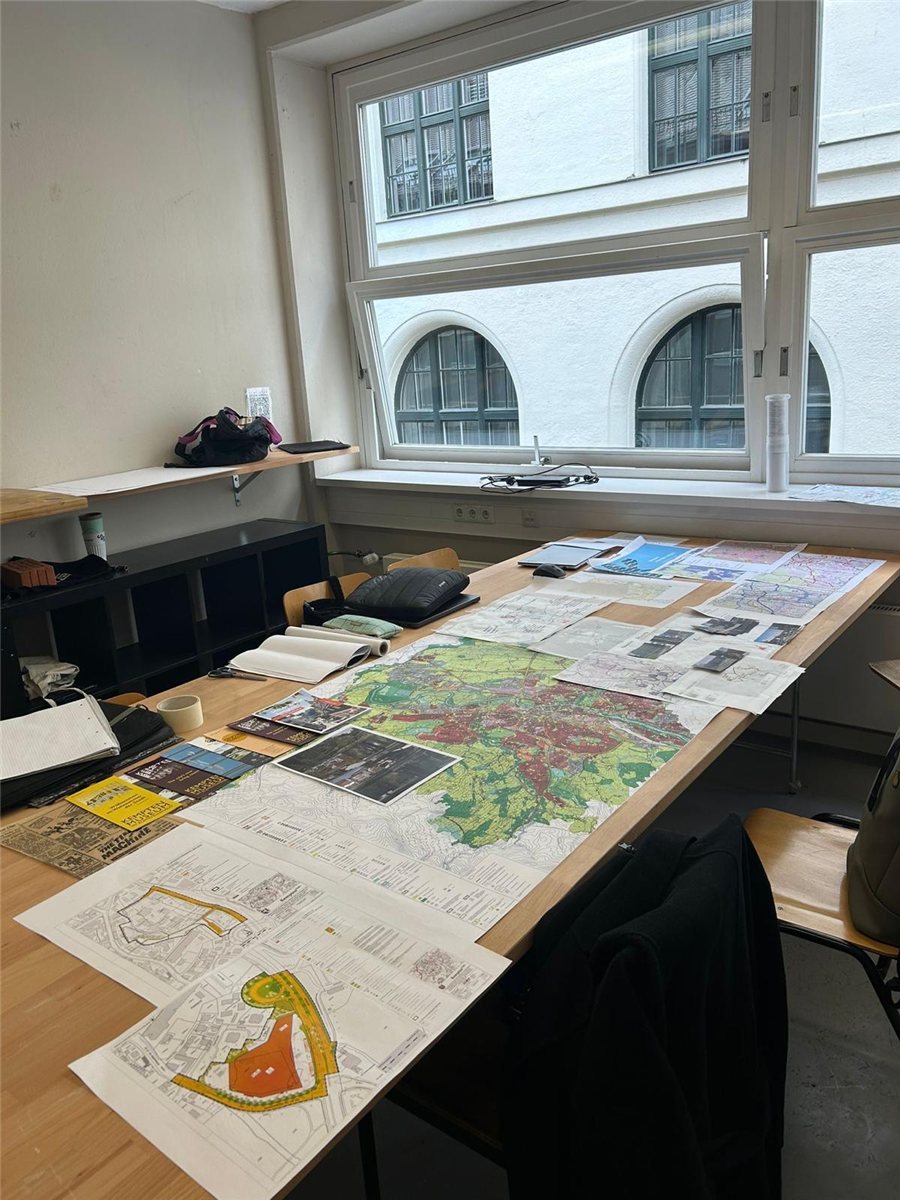
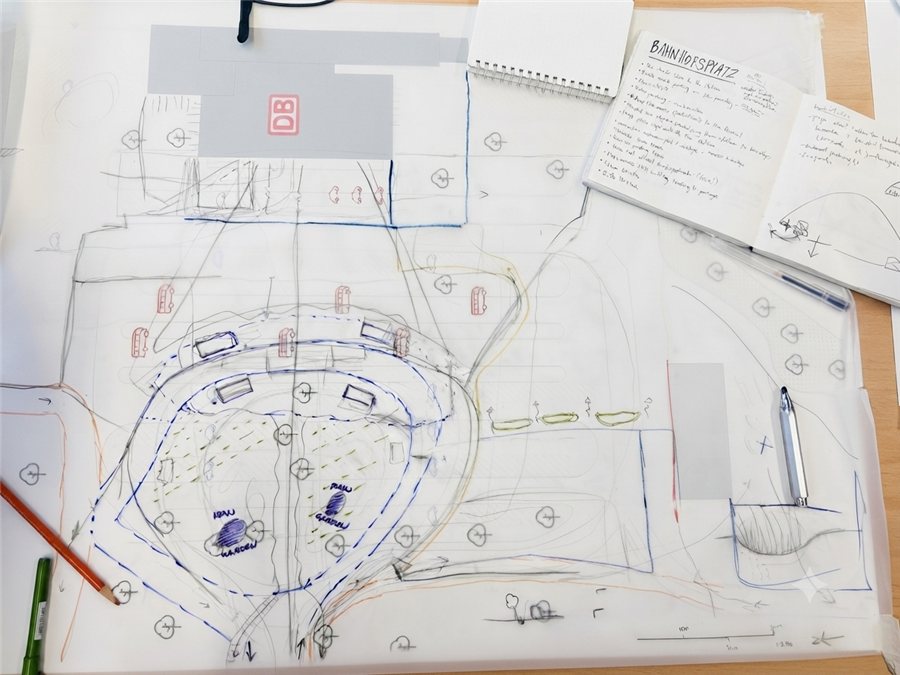
Two groups worked in parallel. One focused on reconnecting the station to the city center. My group, coming from a landscape architecture background, focused on the relationship between the station and the river. Our central question was whether train infrastructure, which currently functions as a barrier both ecologically and experientially, could be redesigned to function as a stepping stone instead.
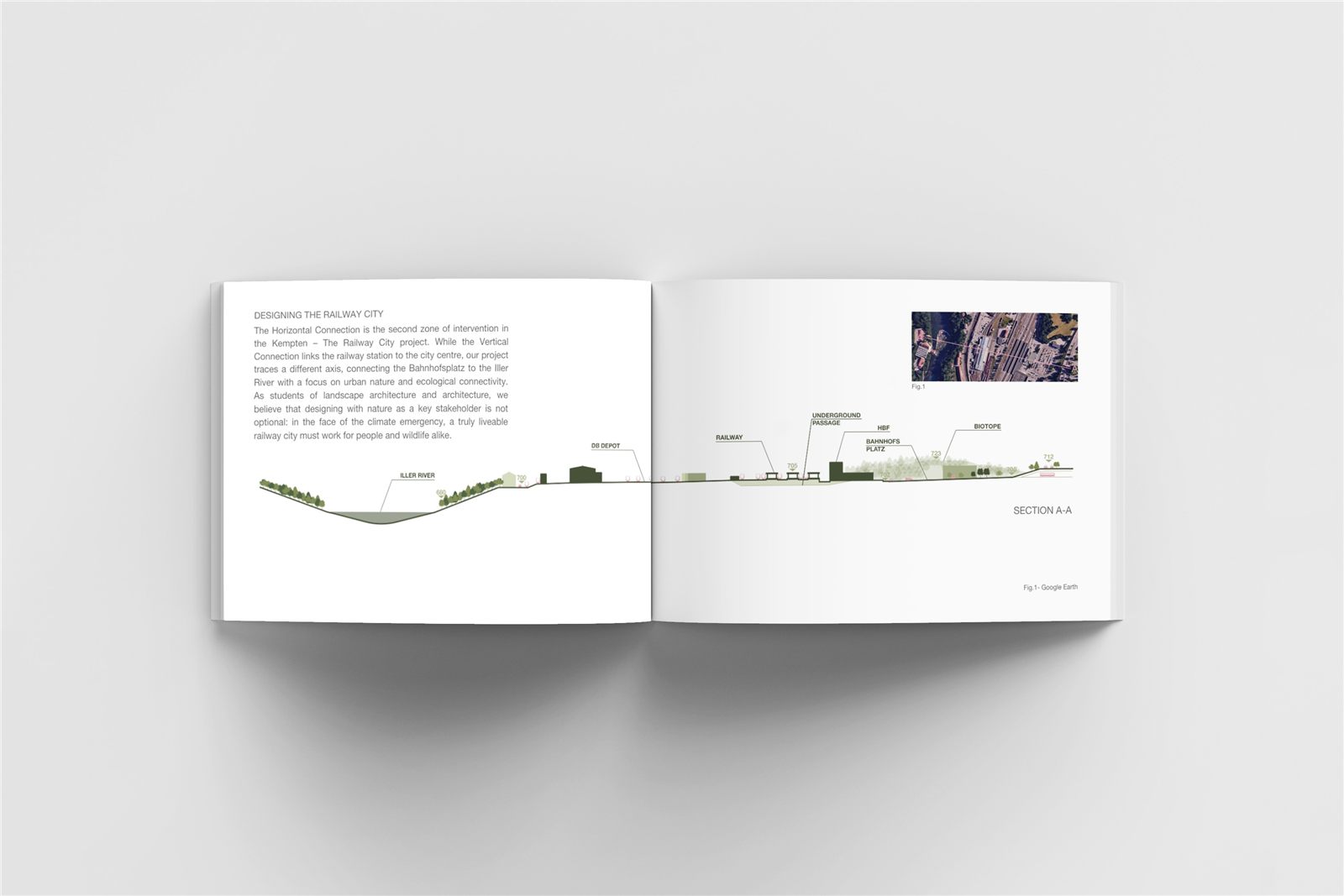
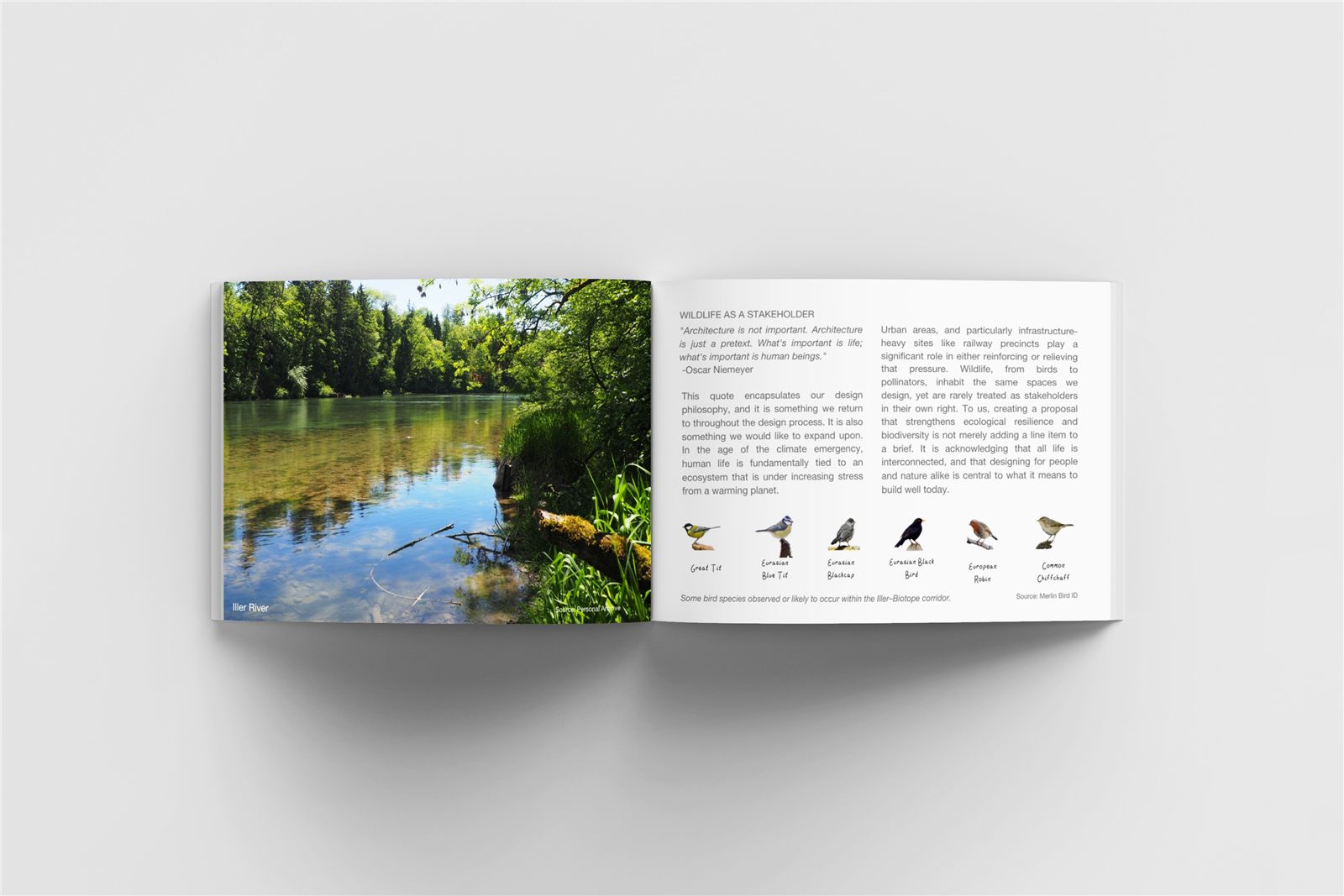
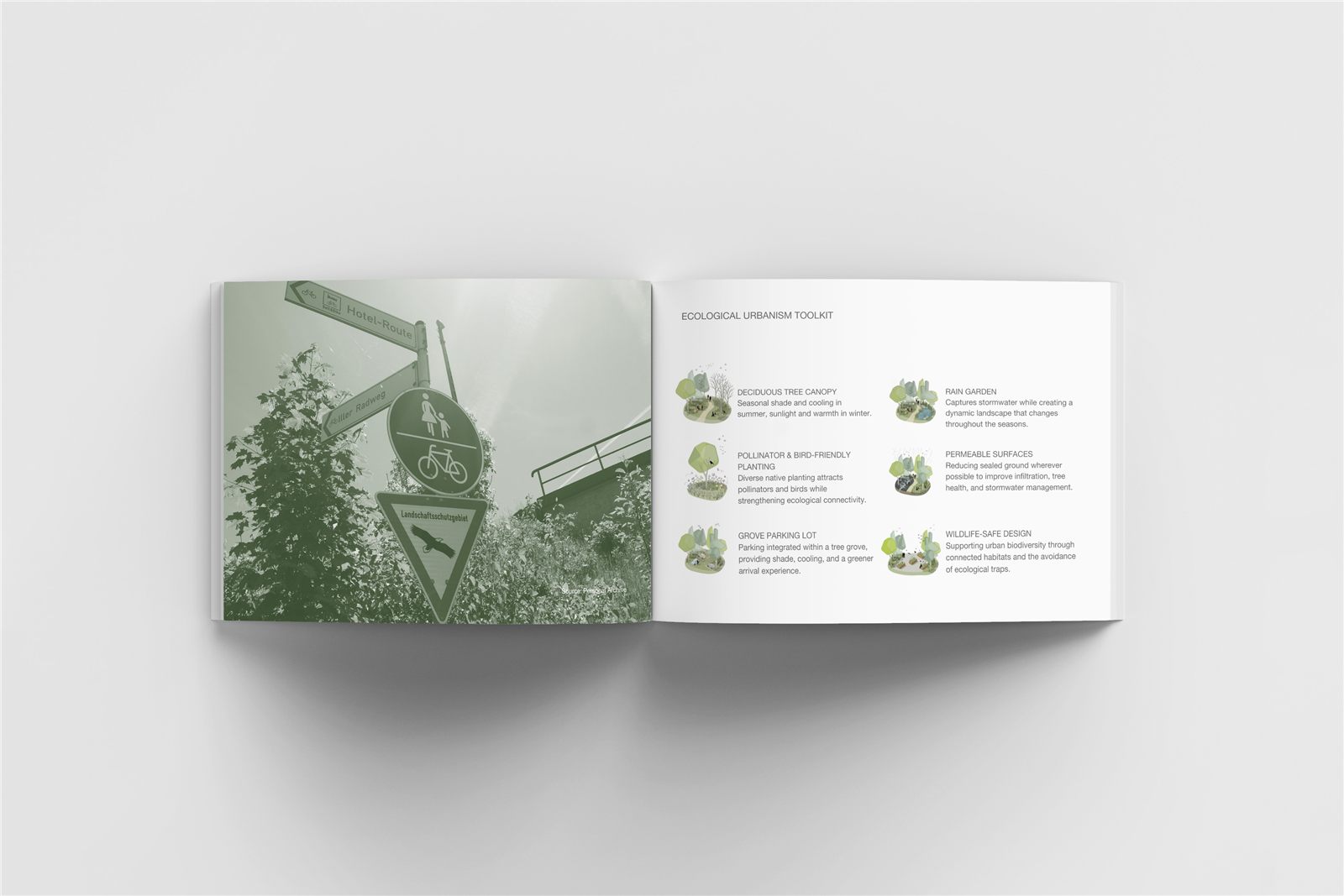
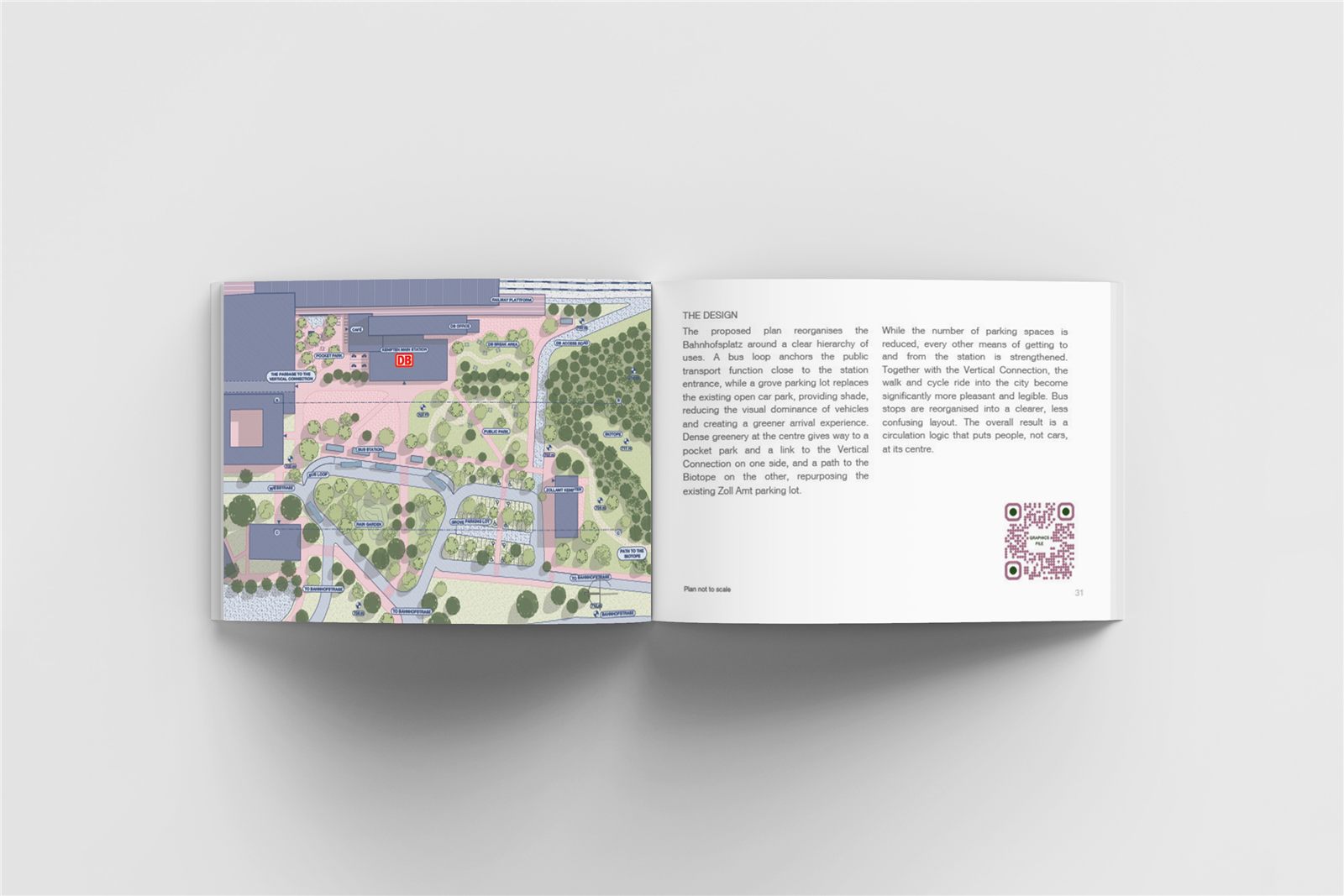
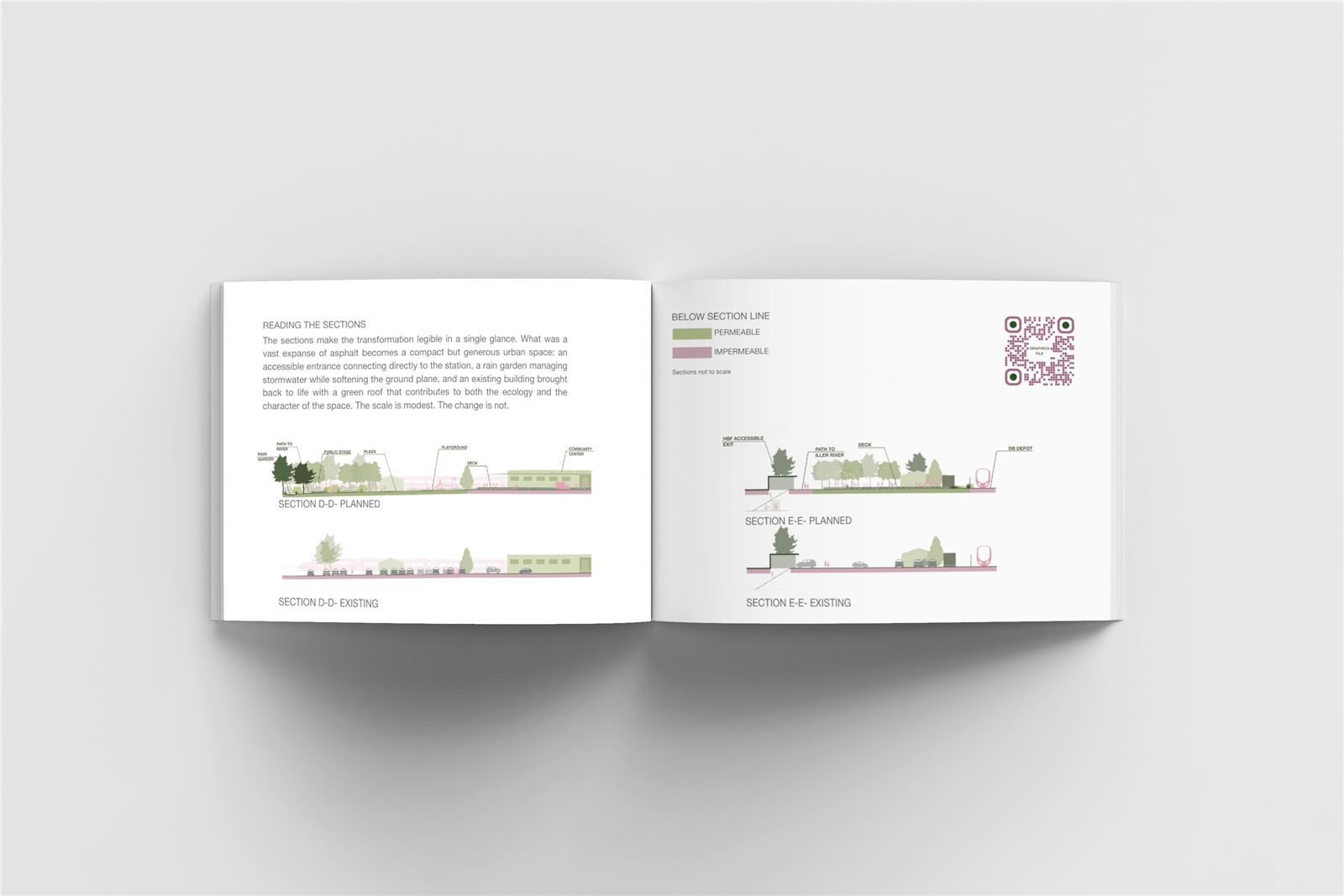
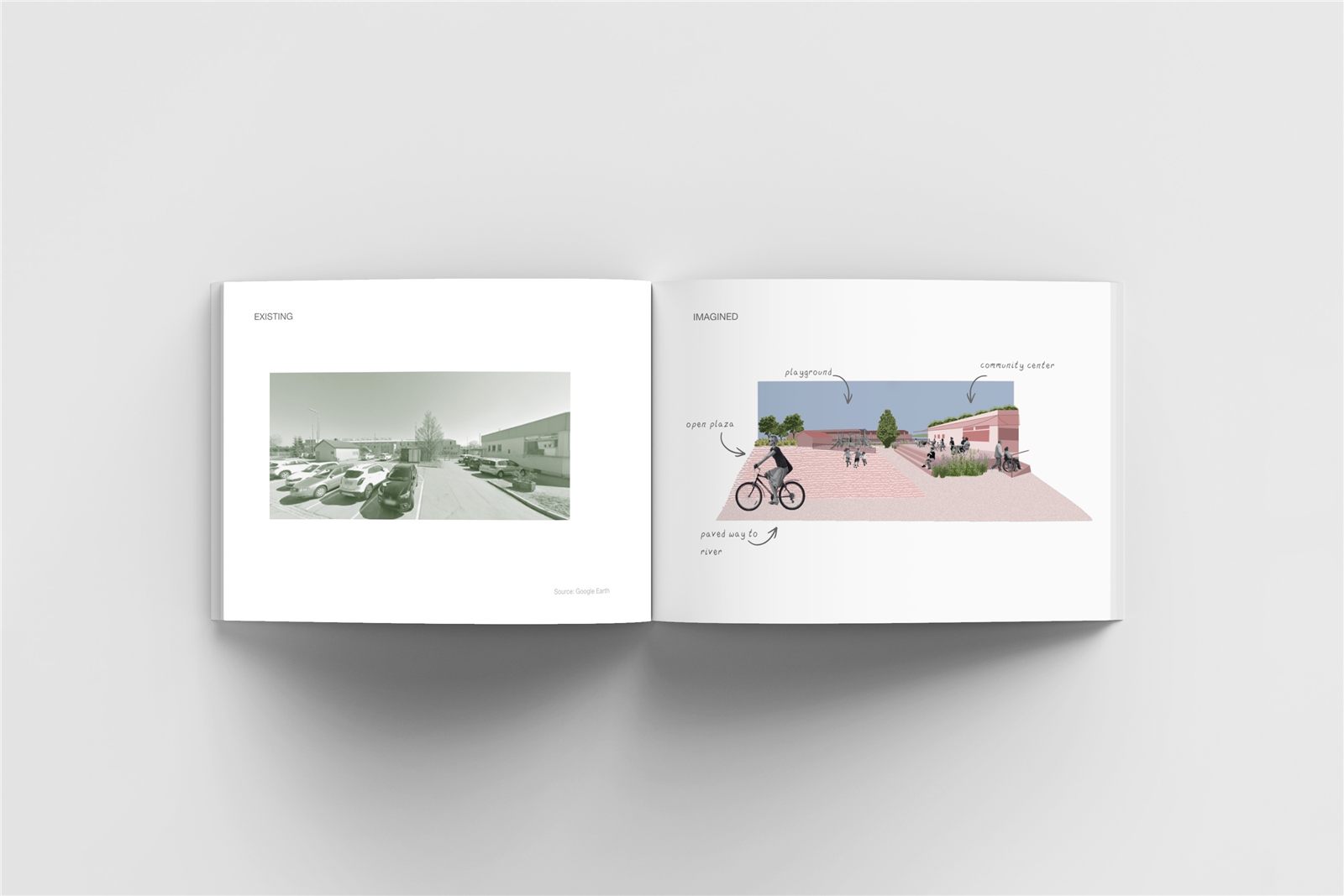
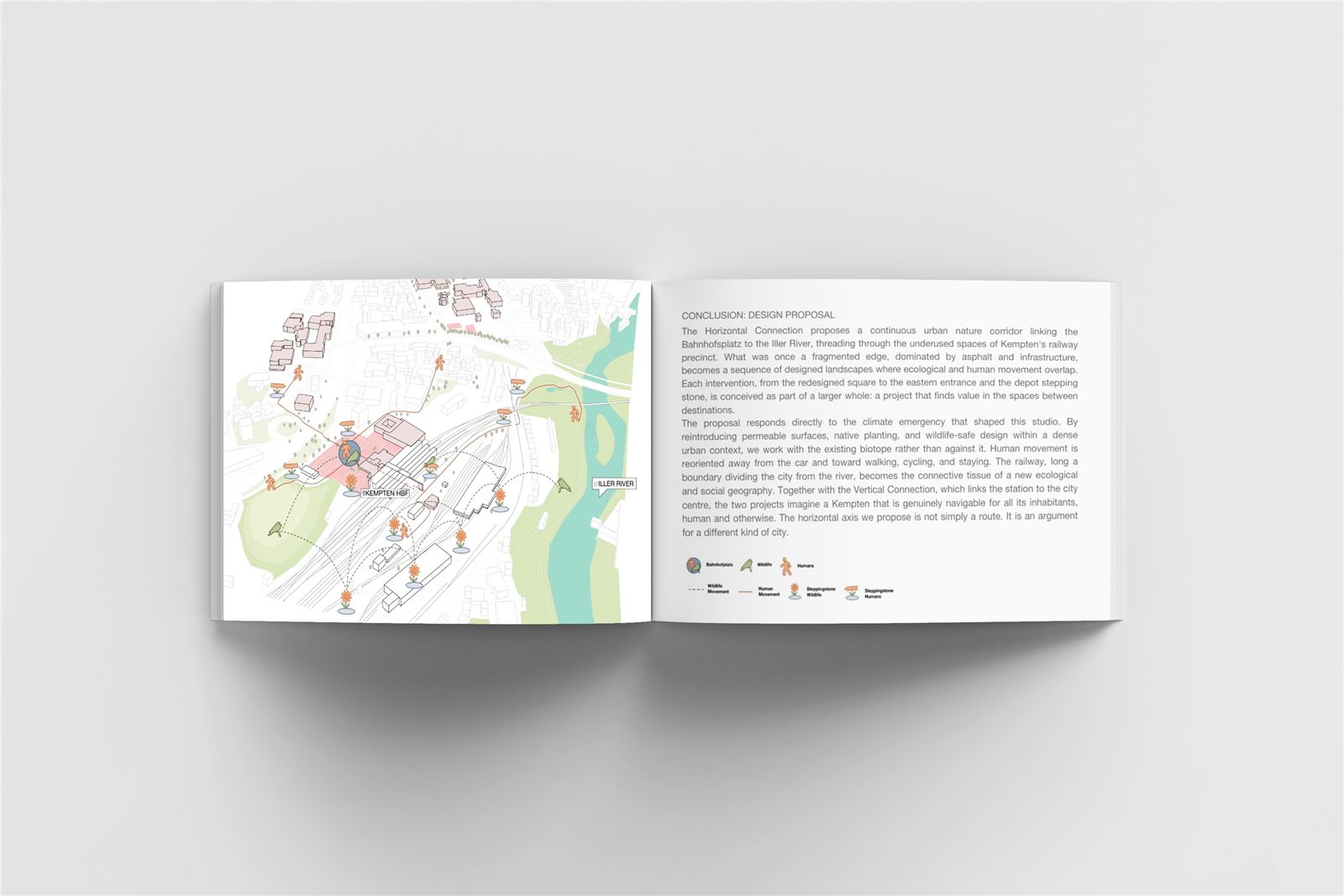
The railway line separates two large, high-quality green spaces: the Iller River and the Kempten biotope. Drawing on an ecological toolbox, European precedents, and the principle that wildlife should be an equal stakeholder alongside humans and infrastructure, we created a new connection between the station forecourt and the river, one where human circulation and ecological movement reinforce each other.
For one of our pin-ups, we designed a board game. Players take on the roles of different stakeholders navigating the city, and through the game they experience the barriers themselves before seeing what a redesigned system could offer.
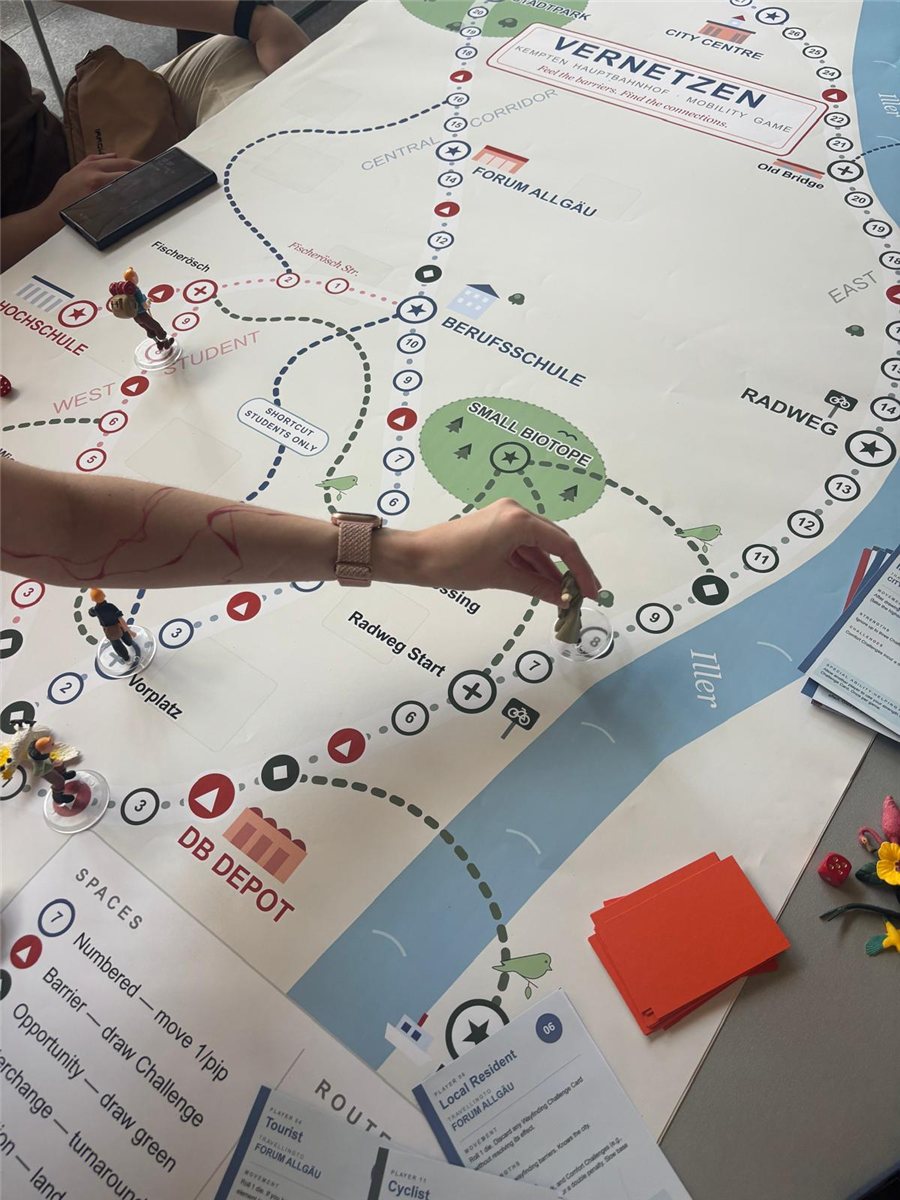
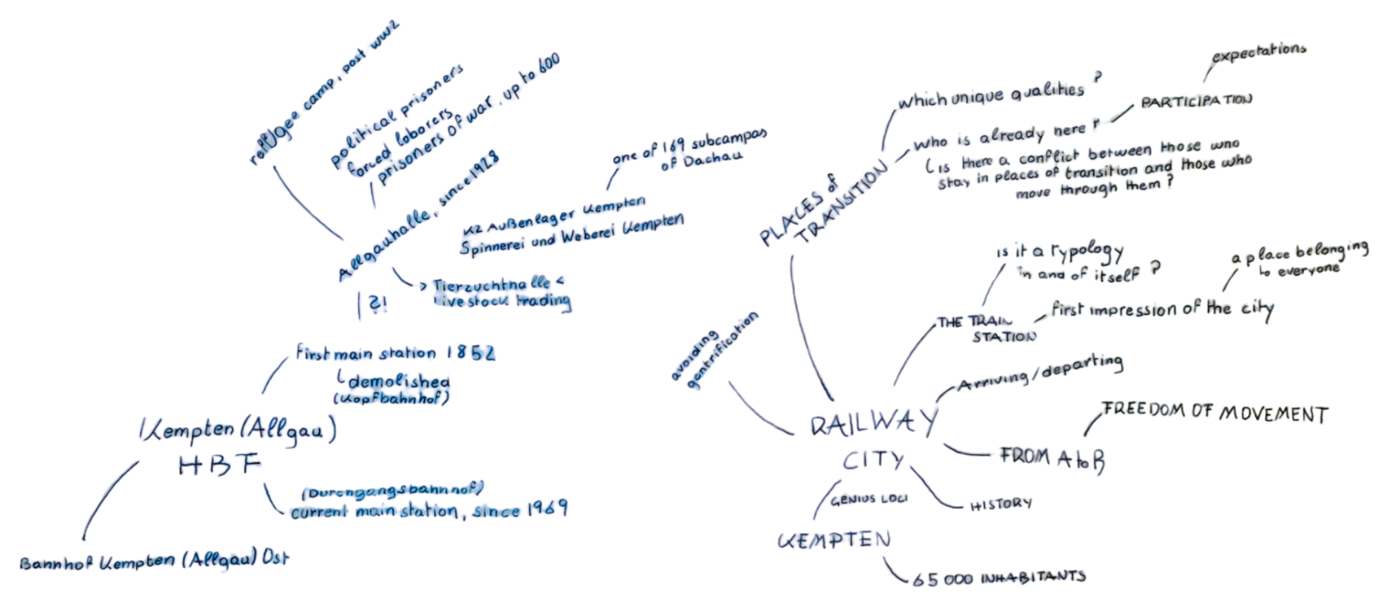
What I took away from this project is that the spaces we treat as our cities' backyards, the strips of land beside railways, the forgotten edges of stations, can hold real human and ecological value, as long as we decide to treat them as a priority.
The Kempten Trilogy
Three publications produced across two studio groups - a shared analysis, and two independent design proposals.